आपका स्वागत है
All Welcome


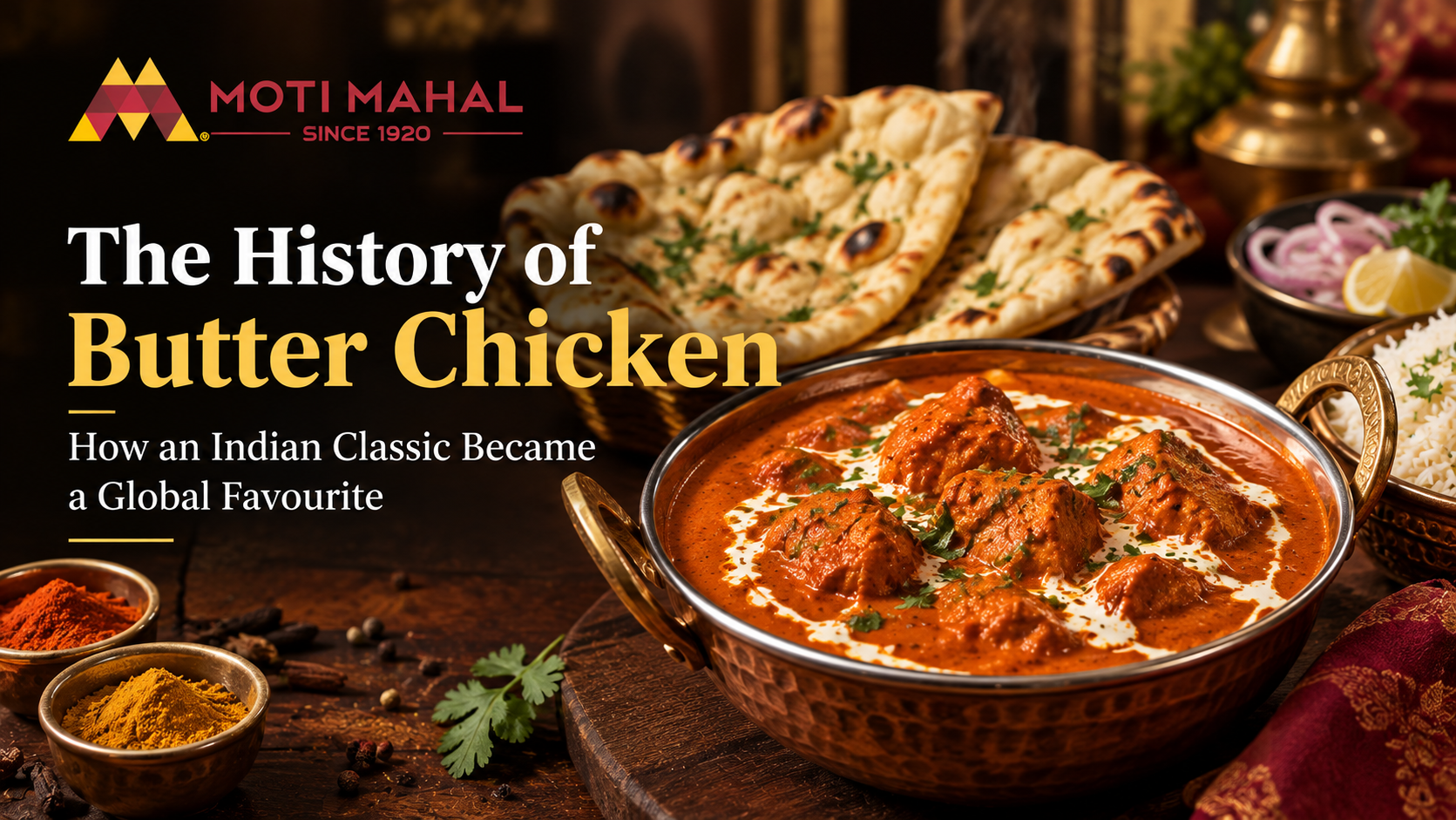
Butter Chicken is one of the most recognised dishes in Indian cuisine. Known for its tender chicken, creamy tomato-based gravy and aromatic spices, this much-loved curry has earned a place on restaurant menus around the world. From family dinners to special occasions, Butter Chicken continues to attract food lovers who appreciate rich flavours and traditional Indian cooking.
But how did this iconic dish become so popular? Its story is closely connected with Delhi's culinary history and the legacy of Moti Mahal, a restaurant associated with the development and popularisation of Butter Chicken.
Butter Chicken, also known as Murgh Makhani, is a North Indian chicken curry traditionally prepared with marinated chicken and a rich tomato-based sauce. Butter, cream and carefully balanced spices contribute to its distinctive flavour and smooth texture.
The dish combines elements of tandoori cooking with a flavourful gravy, creating a balance of smoky, tangy and creamy notes. It is commonly served with naan, tandoori roti or steamed rice.
Butter Chicken is popular among people who enjoy traditional Indian food because it offers a satisfying combination of spices without necessarily being extremely hot.
The history of Butter Chicken is closely associated with Delhi and the culinary traditions developed by Kundan Lal Gujral and the Moti Mahal restaurant.
The dish is widely credited to the Moti Mahal culinary tradition, where cooked tandoori chicken was combined with a tomato-based gravy enriched with butter and other ingredients. This approach helped create a dish that brought together the flavours of the tandoor and a rich curry sauce.
Over time, Butter Chicken became an important part of North Indian restaurant cuisine and gained recognition among diners in India and beyond.
Tandoori cooking is an important part of North Indian culinary heritage. A tandoor is a traditional clay oven used to cook food at high temperatures, producing characteristic roasted flavours.
Chicken prepared in a tandoor develops a distinctive texture and smoky flavour. Combining this chicken with a rich tomato-based gravy creates the characteristic taste associated with Butter Chicken.
This relationship between tandoori cooking and curry preparation is one of the reasons the dish has become such a recognisable part of Indian cuisine.
Several elements contribute to Butter Chicken's lasting popularity.
The tomato-based sauce provides a balance of sweetness, tanginess and savoury flavour. Butter and cream contribute richness and a smooth consistency.
Marination and suitable cooking techniques help create tender chicken with a flavourful finish.
A carefully balanced combination of spices gives the dish depth without overpowering the other ingredients.
Butter Chicken pairs well with naan, tandoori roti, rice and other traditional accompaniments, making it suitable for a variety of dining occasions.
Butter Chicken can be enjoyed in different combinations depending on personal preferences.
The ideal combination depends on your appetite, preferred flavours and the dining experience you want to enjoy.
Moti Mahal is closely associated with the history of Butter Chicken and the development of popular North Indian restaurant cuisine. Its culinary story is also connected with Dal Makhani and Tandoori Chicken, dishes that have become widely recognised favourites.
For food enthusiasts interested in Indian culinary history, exploring the heritage behind these dishes offers a deeper appreciation of the traditions, techniques and creativity that have shaped Indian restaurant food.
Visit the official Moti Mahal Delux website to explore the brand and learn more about its culinary heritage.
Butter Chicken has travelled far beyond its origins in Delhi. Its combination of familiar ingredients, aromatic spices and creamy texture has helped it appeal to diners with different food preferences.
The dish is also versatile enough to be served at casual lunches, family dinners and special gatherings. Its popularity demonstrates how traditional Indian recipes can reach international audiences while retaining their distinctive culinary identity.
As interest in Indian cuisine continues across global food cultures, Butter Chicken remains one of the dishes most closely associated with North Indian restaurant dining.
Butter Chicken is widely associated with Kundan Lal Gujral and the Moti Mahal restaurant in Delhi, where the dish developed as part of the North Indian culinary tradition.
Butter Chicken is also known as Murgh Makhani.
It is commonly served with naan, tandoori roti or rice. These accompaniments complement the dish's rich tomato-based gravy.
Tandoori Chicken is traditionally cooked in a clay oven and is known for its roasted flavour. Butter Chicken features chicken served in a rich, creamy tomato-based gravy.
Its creamy texture, balanced spices and versatility make it appealing to a wide range of diners. It is also one of the best-known dishes associated with North Indian restaurant cuisine.
The history of Butter Chicken reflects the creativity and heritage of North Indian cooking. From its association with Delhi's restaurant culture to its popularity across international menus, the dish has become an enduring favourite.
Moti Mahal's culinary legacy is closely connected with Butter Chicken, Dal Makhani and Tandoori Chicken. Exploring the stories behind these iconic dishes offers a glimpse into the traditions that continue to influence Indian cuisine today.

Join the exclusive Moti Mahal family and launch your own successful restaurant. Benefit from our comprehensive support to establish a thriving business in the culinary world.
Interested?
Click below, and let's start your journey to success together.


